In June I’ll have been a Guide with Poofy Organics for 10 years!!! And honestly, I’ve never been more excited, hopeful, optimistic about everything the company offers and stands for! I know direct sales are seen in a less than positive light by many. I also used to not be too thrilled about at one time in my life. But, it’s hard to deny that the opportunities presented by Poofy Organics (I can’t speak for any other company) are just too good to pass up. MANY of you on this page are Stay-at-Home-Moms. Some of you work part time. Many of you have experience selling Mary Kay, Pampered Chef, or other names, but would love to find a better fit for your “crunchy” lifestyle. I don’t know anyone who can’t use extra grocery money (we all know feeding our family healthy, organic food is NOT cheap).
I have been devoted to finding the safest products on the market for over 12 years now, and looked at just about every line known- NONE of them compare to Poofy. With an almost full line of personal care, home (except laundry and auto dish soap, hopefully those will come eventually) & make-up & everything in-between line, there’s something for everyone. I know of no other line offering more USDA certified organic products that they are making themselves in-house. Other brands on my Approved List that are also USDA certified organic are making a small fraction of what Poofy makes. The prices are VERY reasonable for certified organic, handmade to order daily products. Are you paying more because this is a direct sales opportunity company? NO. You are paying full retail price. The same price you’d pay through Poofy.com. Poofy gives us Guides the products at wholesale price, a price every single product you buy is available at, so we can earn something too, and I think that’s truly amazing! There are no sponsored trips to Mexico for whoever sells the most products built into the prices you pay, just the true, honest cost of making these amazing products & bringing them to market.
There are 2 fees: $9.99 to join + $9.95/month for your webpage, which is where you & others place orders, you get supplies, etc. The website has just been revamped & is simply FABULOUS! You only have to sell $200 worth in a 4 month period to remain “active”. You also will never be auto-shipped anything that you didn’t order (CAN’T believe some companies do this), and do not ever have to keep inventory on hand. If you have NO experience with direct sales, and no or very little knowledge of Poofy products, it could definitely take a couple weeks, or months even, to get familiar with the process & products. If you do have some direct sales experience, and are familiar with Poofy’s line, you could hit the ground running & be getting your 1st paycheck within weeks. The sky is the limit, and you are your own boss! If you do not have a circle of family/friends/co-workers, etc who are interested in organic products & are concerned you won’t be able to sell $200 in 4 months, this honestly probably isn’t for you… This is a business opportunity, and I’m looking for those who will approach it as a serious opportunity to both make a little money, and help educate & spread awareness about the best products on the market– Poofy Organics!
I just really want to get this info out there. There are barely 300 Guides out there currently. Yes, you read that right, 3hundred. Not 3,000, not 30,000. 300. The time to join has NEVER been better!! Think of where the first few hundred people that joined Mary Kay, Avon, Beautycounter, etc are a decade or 2 later if they stuck with the company! I’d be thrilled to have you on team Eco-Poofy USA, if you think this is the right opportunity for YOUR family!
If you have ANY questions, please send me an email: ecofriendlymamausa@gmail.com. I’ll be the one you turn to with questions, and if I can’t answer them off the top of my head, I will find the answer.
I updated this post a bit and since it’s buried as it’s a decade+ old originally, I thought I’d bump it to the top. Nothing has changed. I wish I could say they’ve improved, but they certainly have not. As you can see, the post before it is sharing how important organic is to me, so this is a good example of 1 extreme to the other. POST: https://ecofriendlymamausa.com/2013/11/07/melaleuca-the-very-definition-of-greenwashing/
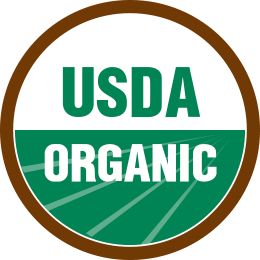
I’ve been meaning to write about this topic for quite some time: the costs associated with becoming a USDA certified organic brand in the personal care product industry, and why I place such great value on brands who are willing to go the extra mile to become certified. Also, some pet peeves of mine such as when companies say: trust us, we’re using organic ingredients and/or we’re better than organic.
The most basic reason I value the USDA certified organic seal is I really do appreciate some degree of oversight. Some checks & balances. Especially when it comes to the word organic. Brands can charge a lot more if they’re using organic ingredients. And they should, because organic farming is more labor-intensive, thus the ingredients cost more. So when I see brands charging top dollar for their products, but then not carrying the USDA seal, and sometimes even getting a snarky response like: we’re BETTER than organic, it doesn’t sit well with me. We need a set of standards we can rely on. You can tell me x, y, z about how “clean” your products are, but unless you’re a family member, or my best friend, you’re asking me to have full faith in what you’re promising me. And in my 44 years on this earth, I’ve learned that people will say anything to make money. A small example of what I’ve heard myself from an elderly farmer at my local farmer’s market. I heard someone ask if she used organic practices to grow her vegetables, her response: no. I later heard someone else ask her the same question, her answer: yes. This is just a tiny example of how we have to trust what people tell us, or not. And I’ve been through enough in my decade+ as a label-reader and advocate for organic products that I’m extremely jaded. I’ve seen fraudulent products on the market. I’ve demanded answers from companies when ingredients didn’t add up. And one very large company even went out of business when their products were found to be fraudulent (Ava Anderson Non-Toxic). They were charging big bucks for products labeled as using organic ingredients, when in fact, that was not the case at all. So those are some of my reasons for valuing a system of checks and balances to make sure the products you’re telling me contain x, y, z organic ingredient actually do. Is it a perfect system, no? There is always room for human or technology errors, as well as corruption, with any system.
Let’s talk about cost. I hear this a lot as an excuse: it’s too expensive for my small business to get certified. I call BS! The USDA WANTS more businesses to attain their certification, there is a sliding scale, and even a reimbursement program that might reimburse up to 75% of your cost!! I’ve seen very small businesses do it and not find it prohibitive by any means. I feel that if you’re going to talk the talk of valuing organic, you should walk the walk too. Yes, it entails quite a bit more work for business owners/employees, but this is why they are justified in charging more for their products. What really irks me is there are small brands charging more for their non-certified products than brands who ARE certified. So personally, I will put my money where my mouth is and support those who are jumping through all these hoops to give us, the consumer, the assurance that they are going above & beyond to give us the peace of mind that they are not only using organic ingredients as they say they are, but appropriate cleaning supplies and methods, etc.
I recently wrote to Poofy Organics, the line making more USDA certified organic products than any other brand that I’m aware of (if you know of a brand offering more, please let me know), to gain some current insight on this topic. I asked specifically about the cost of becoming certified.
Response (12/28/23): “Regarding your question I don’t know that there is a simple answer because it is dependent on a number of factors. The specific certifying organization that is licensed by the USDA to administer the process, the paperwork, the audit, etc. The size of the organization being certified (based on actual organic products volume) plus, other costs a business has to incur to meet the stringent guidelines of the USDA. This is important because the cost is not just about the certification fee. From our knowledge just the certification fee can range from $500 to over $15,000 but that is based on volume of organic sales and of course $500 would is for a very small sales volume. Again, that is only one step because business have to meet a number of specific criteria and it can be costly for companies to get their operation ready for those guidelines. This includes things like:
–Record Keeping: System in place to track important information every step of the process, from organic certified suppliers, supply receiving and logging, appropriate storage and separation of organic from non-organic, tracking supplies, production logging, quality checks, etc. –Ingredient compliance information –Cleaning and sanitizing procedures – to avoid contamination, etc –Pest control measures – using a professional organization that only used organic supplies, and logging all services provided and incidents –Plus, others This is to provide context that in order for an operation to get certified, they must be willing to invest in its ability to meet the business operation requirements. Before an entity can get its products certified, the business itself must first become certified to be able to manufacture and sell organic products.”
To go into more depth on the procedures and checks/balances involved, because I really appreciate knowing all this and hope you will too, I’ll share the following which was written by Kristina, the former owner of Poofy in 2017. It’s about more than JUST the ingredients.
“What does it take for us to become certified? I will try to make this as simple and EXCITING as possible lol. First, we needed to fill out what seemed like an eternity of surveys/questionnaires. The questions were extremely detailed down to the most minute piece of information. We were asked about our water supply, how we clean & sanitize work stations, how we clean & sanitize our equipment. Meticulous records needed to be maintained from start to finish of ANY product being manufactured. (If a facility has pests, only certain pesticides may be used. Luckily, we have not had that issue.) Back to keeping records, for instance, a record of each ingredient we use is kept. When we order an ingredient, it goes in our record. We need to list who the supplier is (and of course they must already be certified as acceptable to use by the USDA certifying company. In our case, it is Baystate Organic Certifiers). We need to track what date the product was ordered and when it was received, who received it, the lot # and where the ingredient was stored. Another record we keep is our manufacturing record. On it, we list what product we are making, the date it is being made, who is making it, ALL the ingredients AND units of measurements for those ingredients, all lot numbers associated with the ingredients and how many products were yielded. Then our products are assigned lot numbers. It is quite a process for every time a product is made, especially because Poofy Organics has over 100 organic products. it can become quite hectic! Another record that is kept is the cleaning/sanitizing record. Every time a product is manufactured, we must document how we cleaned & prepared the equipment and how it was purged. Lastly, we have a cleaning/sanitizing record for our facility. This includes when and how we clean our floors, etc.
Anytime a new product is created, we have to send an OPP- Organic Product Profile to our certifying company. On it, we need to list all the ingredients, the supplier and the concentration of those ingredients. Any non-organic ingredient that is allowed in the organic product (and those are very few and minute percentages), needs to go through another process which maintains that the ingredient has not been manufactured using sewage sludge or ionizing radiation and has not been created using GMOs (genetically modified organisms). An example of such an ingredient would be baking soda. Because baking soda cannot be found organically, a company like Bob’s Red Mill is a staple for organic companies. It upholds the highest standards in the industry. A new product considered for certification also needs to go through a rigorous “label” certification. Even the labels have standards and rules. Each label is sent to the certificating agency to make sure it is in compliance with those rules.
We are inspected annually. Each year a new application for certification needs to be completed- some of the information is stored so it makes things a bit easier. During inspections, records are sifted through to make sure all ingredients, products, manufacturing, labels and cleaning/sanitizing is in compliance. Batches are randomly picked to make sure the ingredients and numbers add up to the number of units sold. It is quite a heavy-duty process. It is often misunderstood that once a company is certified, the job is over. It is a CONSTANT process- always keeping records, always turning in new documents.”
So I don’t know about you, but I really value that companies are willing to go above & beyond, create more work for themselves, but give me the peace of mind that they are following best practices and not just asking me to trust them, it’s all good….
Recently I’ve been going through my personal care recommendations, starting with my Approved List and working my way down. To be on my Best of the Best List, the company must be certified organic. There is a subsection down below that for brands that aren’t certified but still good, based on what they are claiming they use, and as long as they don’t contain ingredients from my Ingredients to Avoid list (a work in progress). 2 companies moved from my Best of the Best list, a place very few companies hold.
Trillium Organics moved to my So-So List: “We held the USDA organic certification from 1999 to 2020 We let it go during the chaos of Covid So no we are no longer certified. But we have not lowered our sourcing standards or production practices. So it’s really just a matter of whether you trust trillium. We sure hope you do!!” Again, this issue of trust. You want to charge top dollar, and I’m just supposed to trust you’re using the finest organic ingredients and doing the right thing, even with no oversight or accountability whatsoever? Sorry, just can’t do that. While it’s a very small line, the products are quite pricey, quite a bit more than their certified organic counterparts. This, in addition with adding potassium sorbate to one or more products led me to move them from my Approved (best of best) list to my So-So List
Then there’s Lovely Lady. I noticed their products no longer carried the seal either, and wrote in to inquire. From their customer support (12/26/23): “after approximately 10 years of operations with the USDA certified organic program, we decided to discontinue that relationship a while back. While we do continue to source certified organic ingredients from our base of suppliers, the additional operational costs to maintain the seal compliance vs the benefit to Customers no longer made sense for us. So, like many others in the health and beauty sector industry who once had, or once actively pursued such certification before ultimately reaching a similar conclusion, we also decided to part ways with them. Please let us know what other questions or concerns you may have. We are pleased to report that when that decision was made and shared with our subscriber base a few years ago, they well understood the decision and rationale and have remained loyal knowing that we have not waivered in our mission nor commitment.”
Me: “Very interesting. So did your prices go down once you ended your certification? Can you help shed some light as to how much it costs to be certified? It has always been my understanding that it’s proportional to annual sales, so that smaller businesses don’t pay as much as larger ones. I would love some insight to help me understand the situation a little better.”
Response (2/2/24): “Respectfully, the aperture of the lens needs to be much wider when speculating on the downstream impacts with this kind of decision. Operational costs in the way you have referenced would mean looking solely at the charges to be paid annually to whichever organization provides the seal. You are correct in that there is a sliding scale. However, there are exponentially more things to consider when taking on or maintaining a program like that as it involves additional staff time for more frequent inventory checks, significantly more time spent on reconciling documents and reserving additional facility time for annual inspections, opportunity costs for needing to submit new product concepts months in advance for review with no guarantee of approval, having to scrap packaging that was once approved and then having to reinvest in replacements, not to mention a lot of unprofessional conduct by the certifier itself which led to the ultimate decision to discontinue and you can be sure we did not take that lightly nor did we do it in a vacuum. Hope this context is helpful as it is purely aimed at being constructive and enlightening.”
In my opinion, everything they just listed is precisely what I want them to be doing! My response (to which they have not responded, but we all know the answer): “So this begs the question, did you lower your prices once you no longer had to spend all the additional money on staff time, etc?”
Finally, let’s look at Toups & Co. They’ve said they’re working on their organic certification for years now. I wrote in to ask about the status and was told: “We have found the certification to be a rigorous process, however we are still working towards it with some of our products.” Looking at some labels I found they list organic coco-glucoside in their baby & men’s wash. To my knowledge, that ingredient can’t be certified organic. I wrote in, and was sent a certificate from their supplier as proof it was organic. Well, it didn’t even list coco-glucoside, it listed potassium cocoate. I responded with: what am I missing here, this isn’t even the same ingredient. The response: “I’ve confirmed that we are indeed using potassium cocoate and not coco glucoside. That has also been corrected on the website as that is not the correct ingredient. We changed that some time ago and the correction was never properly made so it’s great you brought that to our attention.”
Mistakes happen, I get that, I’ll give her grace there. But it just begs the question: what else changed and wasn’t updated? There is absolutely no assurance that anything is accurate on the labels, and/or that she truly is using organic ingredients at all. Also, the certificate she shared with me lists the potassium cocoate as made with organic ingredients, which means it’s 70%+ organic. She lists it as organic, which would mean it’s 95%+. These details matter to me. It’s an example of trust, when I find errors like these, my trust goes out the window. Egregious enough to move off my Approved list, I guess not. But you will not find me making any purchases for these products, especially at those prices.
In conclusion: yes, I think it’s possible to regulate an industry to death. But I also know for a fact that some people will do and say anything to take our hard-earned dollars. Consumers are trying really hard to make good, healthy choices, and ARE willing to pay more money. That’s a fact. We vote with our purchases. If you’re willing to pay as much, or more, for a brand that tells you they’re using organic ingredients, just trust them, so be it. If you’re willing to trust a brand that tells you they’re BETTER than organic, for x,y, z reason, again, your choice. Can they prove it? No. Personally, I will stick with the brands who are going above and beyond to prove that they believe in all things organic. Actions speak louder than words, something I find myself saying pretty much daily in my house (with a 10 & 13 year old!)!!
If you’re new to Poofy Organics and want to save on your purchases, contact me for details on my rebate program, as well as a 10% off coupon code! Email: ecofriendlymamausa@gmail.com. And be sure to visit my Approved list shared above for other options as well!

 Eco-Friendly Mama: Safe product recommendations with a focus on organic and Made in USA!