I'm Jess Brandt, a label-reading Mama on a mission to find the safest products on the market!
08 Apr 2014 3 Comments
in Eco-friendly living, Resources
05 Apr 2014 1 Comment
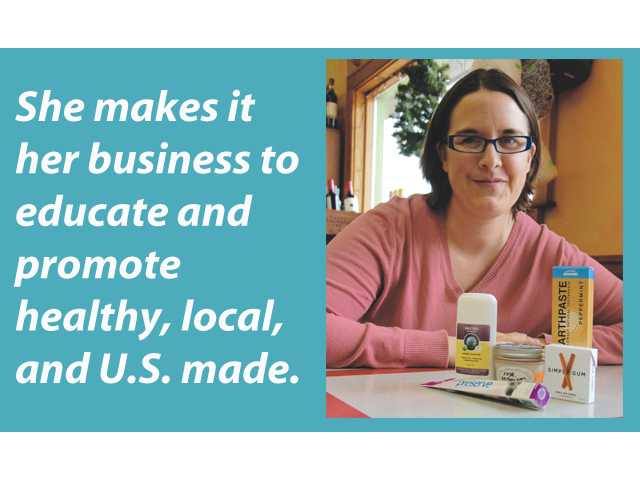
A Gays Mills resident and mother of two has taken her passion for American made and eco-friendly products to a new level.
Jessica Brandt describes herself as a “label-reading mama on a mission to find the safest products on the market.” She started a website to share her mission with others, researching and promoting her discovery of eco-friendly and American made products.
Brandt states on her website that her first priority is finding safe products and second that they are made in the USA.
The inspiration for Brandt’s venture came while she was shopping for her son’s first birthday.
Finding that a popular toy company was being manufactured in China didn’t sit right with Brandt. She felt that more USA-made product options had to be out there. The website lets Brandt share her research and resources with others.
Brandt sees her passion for American-made products as a natural outgrowth of her passion for local economy.
“I’m a huge advocate of shopping as locally as possible for a couple of reasons,” noted Brandt said in an recent interview with American Made Insider. “Reducing the carbon footprint of products, supporting my neighbors, and keeping strong tax and social security base in our country.”
Brandt’s website breaks down the different products in easy to follow categories, thoroughly covered to allow consumers to find just about everything they could need from dental floss to ceiling fans.
Safe products for children are a hot ticket item for Brandt.
The website offers safe toys and sippy cups options. Also featured on the website is a baby registry, helping parents who have an interest in eco friendly and American made products extend that to their baby showers as well.
“A mission was started to try and find the safest baby items, preferably made in the USA, for mama’s to put on their baby registries,” Jessica noted on her website “It can take countless hours and frustration as an expecting mama to go through the infinite material on the internet and try to decipher what is safest for their little ones.”
Some of the items listed include reusable wipes made from bamboo or organic flannel, cribs and crib mattresses, strollers and car seats, binkies and even baby nail clippers just to name a few of the gems Jessica has found in her research.
“My goal is to make you more aware of what you are putting on your body, but especially that of your precious child,” said Brandt. “Most people on my page are here because they are looking for eco-friendly AND family-friendly products. Every parent I have ever met, only wants what’s best for the families.”
With a background in Spanish language education, Brandt put her teaching career on hold to be a stay- at-home mother.
Along with the website, Brandt makes her own deodorant and scrubs available for purchase at the Kickapoo Exchange Co-op in Gays Mills.
The homemade deodorant sells for $8 for a four-ounce glass jar.
“There are no frills, no fluff,” Brandt boasted. “Just a plain Mason jar, a label with ingredients, and the frequently asked questions.”
Brandt’s oatmeal-and- sugar body scrub is available in several different scents. The scrub can be purchased on her website or at the Kickapoo Exchange. It costs $6 for a four-ounce jar.
Offering consumers a one-stop shop for favored products, Brandt has also started a ‘buying club’ through her website.
“I came up with the idea after people were commenting about having trouble purchasing items because of being unable to afford shipping costs,” Brandt said.
Several different package deals are available for people including a beginner sample pack for $20 with $5 shipping. The sample pack includes samples of various soaps, toothpaste and Brandt’s own homemade deodorant.
“I’m trying to diversify, but keep it basic at the same time,” noted Jessica. “The feedback I’m getting is great, people are so excited.”
Also included are medicine cabinet basic essentials and cleaning essentials packages with a large variety of products available.
The products on order lists vary by season. There will be a core list of items available with some additions each quarter to reflect the seasons.
“Last box, I did more Easter stuff,” explained Jess “with eco grass and jelly beans, And I will add sunscreen an other items in the future for the seasonal aspect.”
There are no fees to join the buying club. Brandt doesn’t offer a discount on purchases. Many vendors do not want the club to create competition with their own sales, but she negotiates sales with willing vendors whenever possible.
Brandt also expressed a desire to involve more local producers, who may have a product that would interest those in the buying club.
“I would love to add any local stuff,” Brandt said. “I’m always looking for new things. ”
Currently, the two local vendors are LuSa organics and Brandt herself.
Some of the items available through her buying club are also available at the Kickapoo Exchange in Gays Mills.
Area residents who would like to be involved in the buying club should contact Brandt via email, both to order and to work out arrangements for picking up orders.
The orders are placed quarterly. The next order will be accepted May 1-18, and can be emailed to ecofriendlymamausa@gmail.com. There is complete list of product on her website ecofriendlyusa.wordpress.com.
There is no minimum order policy for the buying club or obligation to ever purchase again. Shipping is also available to anywhere in the world with shipping insurance as well.
“Mainly I want to get safe products to the people who want them,” Brandt concluded.
Article link: http://www.swnews4u.com/section/157/article/20832/
17 Mar 2014 2 Comments
There are many issues surrounding the production of this oil that is used in a variety of products that lead it to be an un-eco-friendly (yes, I just used two hyphens in the same word!) choice. Here’s a great article shared on my FB page today:
“Palm oil is a type of edible vegetable oil that is derived from the palm fruit, grown on the African oil palm tree. Oil palms are originally from Western Africa, but can flourish wherever heat and rainfall are abundant. Today, palm oil is grown throughout Africa, Asia, North America, and South America, with 85% of all palm oil globally produced and exported from Indonesia and Malaysia; but most of the time not using sustainable measures.
The industry is linked to major issues such as deforestation, habitat degradation, climate change, animal cruelty and indigenous rights abuses in the countries where it is produced, as the land and forests must be cleared for the development of the oil palm plantations. According to the World Wildlife Fund, an area the equivalent size of 300 football fields of rainforest is cleared each hour to make way for palm oil production. This large-scale deforestation is pushing many species to extinction, and findings show that if nothing changes species like the orangutan could become extinct in the wild within the next 5-10 years, and Sumatran tigers less than 3 years.
In total, 50 million tons of palm oil is produced annually, supplying over 30% of the world’s vegetable oil production. This single vegetable oil is found in approximately 40-50% of household products in countries such as United States, Canada, Australia and England. Palm oil can be present in a wide variety of products, including: baked goods, confectionery, shampoo, cosmetics, cleaning agents, washing detergents and toothpaste.”
Here’s the full text: http://www.saynotopalmoil.com/Whats_the_issue.php
27 Feb 2014 Leave a comment
in Eco-friendly living, Resources Tags: Pure Play Kids coupon code
I posted yesterday that Pure Play Kids created a coupon code just for this page, but forgot to ask when it expired. Well, it’s good for one year!! That way you can do your Birthday, and other shopping as needed, not right now!! This makes me so, so happy to share!!! Be sure to thank them when you do use it as well. Mike & Tania are truly great folks, who care deeply about made in the USA products!! CODE: ECOUSA2015 for 10% off your entire order
25 Feb 2014 3 Comments
in Eco-friendly living, Resources Tags: organic cotton doll made in USA, Pure Play Kids coupon code
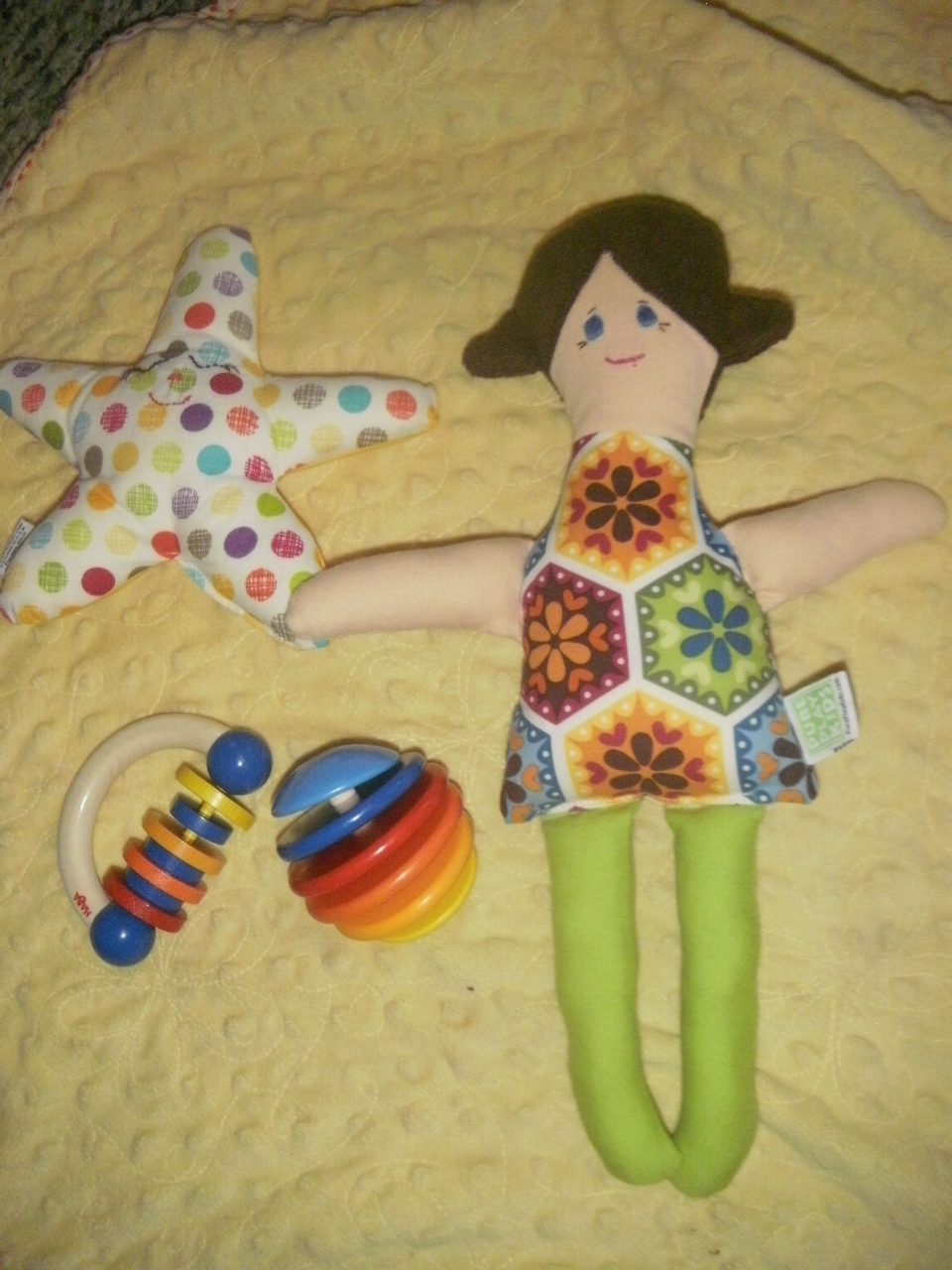
Ohhhhh my goodness– there is little that’s more fun than opening a large box of goodies from Pure Play Kids!!! I adore our new additions sooooo much! My son’s 3rd birthday is coming up in a couple weeks so I got several things for him which I’ll share later in a different post, but I wanted to show some of the items I got for my Baby Girl, who is just about 8 months currently. I spent a lot of time researching trying to find an organic doll made in the US of completely US sourced materials, and did not find one that met all those criteria, at least not for under a couple hundred dollars for some Waldorf options (great if you can afford them!). Pure Play is as close as you can get to what I wanted. The dolls are hand stitched in the US from organic fabric imported from South Korea, and are GOTS certified organic inside & out. I was pleasantly surprised by how large it was, from the website pic I was expecting it to be smaller. For $30 I could NOT be happier with her. I also got an organic cotton star which is awake on one side, asleep on the other and the other side you can’t see is yellow. I did branch out a bit & make my first Haba purchase through Pure Play, the rattle & ball are made in Germany. I’ve had several people tell me that if I want truly the safest products I’d support made in Europe more, and I agree they have stricter safety standards which makes me happy! My goal is to find truly safe products that would meet European standards, while supporting made in the USA. But, I did want to add a bit more color & variety to my Baby Girl’s safe toy offerings, so decided to add these.
The Pure Play folks (Mike & Tania, who are super amazing & dedicated to made in the USA as much as possible) have told me they plan to increase their made in the USA rattle selection, and are always open to new ideas too. I’m going to put in a request for a boy doll to go with the couple of girls that are offered! All together I spent $200, which yes is a lot of money, but I feel I got SO much for that money, and other than the 2 items from Haba my entire order is made in the USA! My sister added a couple things to my order for her daughter’s Easter basket, one of the items she ordered was a magnetic farm set. I didn’t pay attention when ordering it to see where it was made, but did not expect it to be made in the USA (Pure Play offers many made in Europe items too, but NOTHING made in China!). Sure enough, it is indeed made in the USA, and they have a whole selection of different magnet sets which I am so happy to have learned about. I’ve looked for, and been asked about magnets in the past & for some reason my searches did not lead me back to Pure Play, but now that I know I will be spreading the word!! And, they generously created a coupon code for this page! 10% off using the code: ECOUSA2015 the code is good all of 2015!! Their website: http://www.pureplaykids.com/
03 Feb 2014 2 Comments
in Eco-friendly living, Resources
February 2, 2014
Silicone Safety
By Jolene Marty
Co-Admin Eco-Friendly baby/family products MADE in the USA
With such limited products that are actually safe for our family, it’s always wonderful to hear about alternatives we can use. I used to think silicone was undoubtedly one of them. Upon researching into silicone a bit further, I was disappointed that there was not more information on the safety of the product. Criteria I was trying to specifically find was how easily, and in what situations, might this substance leach or off-gas. Even though silicone itself is a natural substance, is it something we need to handle with caution in much of the same ways as plastic?
Upon reviewing several articles I unfortunately do not have a clear answer. Here are some things that I did find out about silicone. Also if you do choose that this is something you will use, or continue to use, some safety pointers to help keep your risk, no matter how small, to a minimum:
If you choose to use Silicone products here are a few safety tips:
Silicone has been a much better alternative to plastic in our world but, it is still a man-made product that has been altered and chemically processed in a plant to fit a variety of needs. It would be a good choice over plastic for many things however, like plastic it still has the opportunity to off gas when heated.
If you are interested in some articles that were found interesting including one explaining the science of silicone please look below!
http://www.livescience.com/37598-silicon-or-silicone-chips-implants.html
http://www.dowcorning.com/content/discover/facts.aspx?wt.svl=FS_readmore_home_FACT
http://www.symptomfind.com/health/is-baking-with-silicone-safe/
http://green.yourway.net/is-silicone-bakeware-really-safe/
26 Jan 2014 4 Comments
in Eco-friendly living, Resources
by Jolene Marty
Co-Admin Eco-Friendly baby/family products Made in the USA
There are many wonderful advancements in our world that have been made possible with the introduction of plastics. Many medical devices and lifesaving tools are made from plastic and they have most certainly made our lives more convenient. There is a plastic option, often times disposable, for almost anything. Plastic is durable with its strength being impressive enough to make moms and dads everywhere happy to use them for sippy cups and toys that get thrown across the room, and trust in it enough to keep our children safe in their car seats. Unfortunately in the quest to make things fast, cheap, convenient, and the impossible actually possible (like in medical equipment), companies have put our health on the back burner in order to achieve these things.
Plastic is a synthetic material made from a wide range of organic polymers such as polyethylene, PVC, nylon, etc., that can be molded into shape while soft and then set into a rigid or slightly elastic form. (Google Definitions) To manufacture plastic, depending on the type, you need to use chemicals – a lot of them.
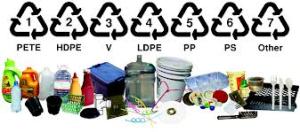
There are already several great resources on which plastics mean what and why they are good or bad. There are some very conservative views on what is safe in terms of plastic but here is my ‘I like to be better safe than sorry’ evaluation of the different kinds, broken down by recycling codes:
Plastic #1: PET or PETE (polyethylene terephthalate)
Found In: bottled water, bottled cooking oil, juice and sports drink bottles, condiment bottles, mouthwash bottles, carpet, textiles, microwavable food trays
Safety/Concerns: It is generally regarded as safe for a one time use but is advised not to be used to refill, heat up, or reuse in any way. (HealthyChild, 2013) If you do choose to use these items, I would advise to buy in the winter/cooler weather only as sitting in a hot transport truck, the trunk of your car, etc. heat unused bottles up and leach chemicals into your item.
Plastic #2: HDPE (high-density polyethylene)
Found In: milk and water jugs, shampoo, toys, household cleaner bottles, pipes, wire and cable coverings, picnic tables, recycling bins, grocery/retail bags, cereal box liners
Safety/Concerns: It is considered a low-hazard plastic. (Mercola, 2013) While generally considered safe by the public, it also has tested positive for releasing estrogenic activity.
Plastic #3: PVC (polyvinyl choride)
Found In: cling wrap, shower curtain liners, mattress covers, toys, peanut butter jars, deli and meat wrap, siding, window frames, blood bags, medical tubing, carpet backing and flooring
Safety/Concerns: Considered one of the most toxic of the plastics, releases PVC dioxins into the environment, and is a potent carcinogenic to animals and humans. (HealthyChild, 2013) Linked to birth defects, reproductive disruptors, hormone disruptor, and cancer. This should be at the top of plastics to avoid.
Plastics #4: LDPE (low-density polyethylene)
Found In: garbage bags, dry cleaning bags, newspapers, fresh produce bags, floor tile, adhesives and sealants, toys, container lids, coatings for paper milk cartons, hot and cold beverage cups
Safety/Concerns: It is considered a safer plastic which is why it is used in many household and food bags however, studies have shown risks of it leaching estrogenic activity much like HDPE
Plastics #5: PP (polypropylene)
Found In: Ice cream and yogurt containers, drinking straws, syrup bottles, diapers, medicine bottles, car parts, garden rakes, appliances, storage bins, baby bottles
Safety/Concerns: Probably the safest plastic as of right now. It is highly resistant to heat and many companies choose to use this kind of plastic because of its safety. According to Mercola’s website, there was a study done where the PP did leach at least two chemicals but it is still under further study for accuracy.
Plastics #6: PS (polystyrene)
Found In: most disposable dinnerware, take out containers, packing peanuts, meat and poultry trays, packaging for electronics, aspirin bottles, coat hangers, toys, egg shell cartons, EPS foam
Safety/Concerns: Also known as Styrofoam, it can leach (especially when heated) styrene, a known neurotoxin. It can cause brain and nervous system problems, as well as kidney and stomach problems. Styrene leaches from containers significantly when oily foods are heated in such. (LifeWithoutPlastic.com)
Plastics #7: Other (includes polycarbonate, nylon, acrylic, and also alternative plastics)
Found in just about anything including toys, other children’s items, everyday items around your house, your car, etc. This is a catch all category that not only includes very dangerous plastics such as polycarbonate, which leaches BPA (and can be found lined in formula cans, 5-gallon water bottles, food can linings, to name a few) but it also includes some of the safer plastics including ‘green’ plastics made from rice, potatoes, etc.
A side note about acrylonitrile styrene (AS) or styrene acrylonitrile (SAN), and acrylonitrile butadiene styrene (ABS) taken in an excerpt from LifeWithoutPlastic:
Two other types of plastic that fall under code 7 are acrylonitrile styrene (AS) or styrene acrylonitrile (SAN), and acrylonitrile butadiene styrene (ABS). Both AS/SAN and ABS are higher quality plastics with increased strength, rigidity, toughness and temperature and chemical resistance. AS/SAN is used in mixing bowls, thermos casing, dishes, cutlery, coffee filters, toothbrushes, outer covers (printers, calculators, lamps), battery housing. The incorporation of butadiene during the manufacture of AS/SAN, produces ABS, which is an even tougher plastic. ABS is used in LEGO toys, pipes, golf club heads, automotive parts, protective head gear. Our research on risks associated with AS/SAN and ABS is ongoing. (LifeWithoutPlastic.com)
Before you get too worried and start running around your house looking at every code (or not being able to find one) on everything plastic or worrying about every possibility in your child’s toys take a look at a few of these general rules listed below:
As always, it is always best to find glass, wood, or stainless steel made options when you are cooking, eating, drinking; amongst many other things you would generally use plastic for. In our lives however, it is almost impossible to get away from plastic entirely. Also, eliminating plastic from our child’s toy box can be a hard and daunting task especially with family members who do not see you eye to eye on the trouble with plastic, continue to offer up those kinds of play things. Keep in mind the few pointers listed above and you will be able to navigate easier through the store aisles!
Listed below are several amazing resources that were found when writing this article. Included are the ASTM standards on plastics, an American Plastic Toys corporation, and a few lists of more common things you can find in each plastics category.
ASTM Plastics Standards: http://www.astm.org/Standards/plastics-standards.html
American Plastic Toys: http://www.astm.org/Standards/plastics-standards.html
A list of companies that sell the toys with APT plastics: http://www.americanplastictoys.com/products.htm
Plastics Numbers & What They Mean by HealthyChild.org: http://healthychild.org/easy-steps/know-your-plastics/
Grants Pass Oregon’s recyclables list by number: http://www.grantspassoregon.gov/index.aspx?page=1002 (Great resource to find out more things that contain which plastics number)
How to Recognize the Plastics That are Hazardous to You by Dr. Mercola: http://articles.mercola.com/sites/articles/archive/2013/04/11/plastic-use.aspx
Another plastics breakdown: http://lifewithoutplastic.com/en/about-plastic/plastic-types
IF YOU ARE CURIOUS ABOUT MEGA BLOKS READ THIS ONE: A plastics article with some toy information: http://lilthumper.blogspot.com/2011/06/legos-mega-bloks-plastics.html
25 Jan 2014 2 Comments
in Eco-friendly living, Resources
11 Jan 2014 16 Comments
in Eco-friendly living, Resources
My son received the 80 piece set for a Christmas gift from my Husbands parents. My side of the family is very aware of, and totally respectful of my wishes regarding made in the USA & (mostly) wooden play things for my family. I immediately assumed the Mega Bloks were going to be made in China, but was surprised to see they were made in Canada. OK, not terrible I thought, Canada has decent standards from what I know. My son dumped them out & within minutes of receiving the gift, Mega Bloks was suddenly part of his vocabulary, and Mega Bloks were suddenly all over our house.
I studied the bag for info on the Bloks. The bag boasts “PVC-free Eco-bag”. Cool. But, what about the blocks–the item my child will be playing with? So I wait for Christmas to get over & call their NA headquarters in Montreal, Canada. I get a recording that says to leave a message & they’ll call back, which I did. A week went by with no call back (I tried calling here & there only to receive the same “we’re busy, leave a message”). So I left my question on their FB page. Several days went by & they answered all messages around mine, but not mine, so I reposted it.
Q: What type of plastic are your blocks made of? Are they PVC & BPA-free? The bag advertises as PVC-free, but I find it odd that the info on the blocks is hard to come by, I see no info regarding it on your site, unless I’m missing it.
A: All Mega Bloks products meet United States and Canada Toy safety requirements for BPA and PVC. We do everything we can to keep them safe for kids of all ages.
Q: My question is whether they are PVC &/or BPA-free. I’m not familiar enough with the safety standards, but know that they may have an allowable limit, which is different than containing none
A: Our toys adhere to US toy safety standards and we are proud to enforce higher internal safety thresholds than required by the standards, but we cannot confirm that the blocks do not include trace amounts of PVC. We assure you that our toys are safe for our families and yours.
(It took me 3 posts to get to the bottom of it, here’s the ultimate answer: https://www.facebook.com/megabloks/posts/10152153976931703?comment_id=32101605&offset=0&total_comments=1¬if_t=feed_comment)
A different post on same topic shared on my wall yesterday: https://www.facebook.com/megabloks/posts/10151568026906703
What ticks me off the most? That they “assure” they are safe, although they cannot even confirm what is, or isn’t in them. No words can convey my frustration with that! WHY would they advertise the bag as PVC-free, when the blocks themselves contain them? To gloss over that fact… To create a smoking mirror… This frustrates me to NO end. I know that in the post or 2 I’ve done about this to date, while trying to get to the bottom of it, many parents have expressed frustration- they fell for the “PVC-free bag”, and assumed the same of the blocks. I’ve learned it’s never safe to assume anything, but feel their marketing ploy on this one is very deceptive!
While my son, who these were a gift for, is nearly 3 & not putting these in his mouth, his 6 month old Baby Sister is in the stage where EVERYTHING goes in her mouth. If it were not for her presence, I may just let my son keep these blocks, as he really, really was enjoying them. However, another issue that arose was I felt as soon as they were introduced to him the wooden block set he received a week prior from Smiling Tree Toys was a little less interesting to him, and that made me sad. And, I immediately loathed the mess they made around the house, as I was finding blocks everywhere. So, I packed them up one day during nap time & to my pleasant surprise he hasn’t asked about them once. We’re back to building towers & pyramids with his lovely, safe, handmade in MN wooden blocks, and I couldn’t be happier. I am going to send the Mega Bloks back to his Grandma & Grandpa’s, where they came from, and ask them to keep them there to play with while he’s visiting them. I will explain to them why I don’t want them in my house, which I’m happy to do as I know it’ll ensure we don’t receive any more Mega Bloks in the future! I REALLY, REALLY want to raise awareness on this issue, as I feel this company is “greenwashing” their products. I was surprised, after posting that we’d received these for a gift, how many replied that they’d received them too… So, please share this info on your page, and especially with other Mama/Dada groups you belong to.
My mission to stick to wooden toys with safe finishes, organic cloth toys, or plastic toys from Green Toys (free of PVC, BPA, phthalates & lead) has been greatly reaffirmed! I’m looking forward to adding more wooden blocks to our collection from Smiling Tree Toys with the next Buying Club order in February.
Sources regarding concerns related to PVC:
http://healthychild.org/easy-steps/reduce-your-use-of-pvc-in-plastics-and-other-household-products/
“Polyvinyl chloride (PVC), or vinyl, is one of the most environmentally hazardous consumer materials ever produced.” http://chej.org/…/documents/PVC_Consumer_Products.pdf
http://www.healthystuff.org/chemicals.chlorine.php
A good resource with safe alternatives: http://www.safbaby.com/lead-free-pvc-free-and-fire-retardant-free-toy-manufacturers
My safe toy list: https://ecofriendlyusa.wordpress.com/made-in-usa-2/toy-list/
Work in progress: https://www.facebook.com/megabloks/posts/10152160438621703?comment_id=32137367&reply_comment_id=32152066&offset=0&total_comments=9¬if_t=feed_comment
Request for 3rd party verification: https://www.facebook.com/megabloks/posts/10152176171066703?comment_id=32246783&reply_comment_id=32250107&offset=0&total_comments=5¬if_t=feed_comment
06 Jan 2014 5 Comments
in Eco-friendly living, Resources
A couple of weeks ago I asked for a volunteer to write a post about disposable diapers, as I get questions on my page often: what to look for, which are made in the USA, etc. I was happy that Sarah Mazzone volunteered to write a guest-post for us. She has her own site with a similar mission to mine: Made in the USA Challenge. For more info on cloth diapering, with made in the USA options, please check out this resource from my website: https://ecofriendlyusa.wordpress.com/made-in-usa-2/cloth-diapering/
Here’s the info she shared with us regarding disposable options:
None of the following environmentally conscious features eliminate the impact diapers have in landfills. They do decrease or remove common toxins used and are produced with safer manufacturing practices. All disposable diapers use a material call SAP, an absorbent gel that has been shown to be toxin-free, but not natural. Here are some of the things to look for when evaluating a disposable diaper for a safety and sustainability implications.
Chlorine free – Diapers are often bleached white with chlorine, releasing the toxic carcinogen dioxin.
Fragrance free – The ingredients “fragrances” and “perfumes” are unregulated and could mean many possible chemicals. Many artificial fragrances contain chemical irritants.
Dye free – Dyes are also unregulated and can cause skin rashes. They are used for wetness indicators and colorful designs on many conventional diapers.
Phalate free – Phalates are well known toxins found in many plastics, including the liners in many conventional diapers.
Contain no lotions – Most lotions used in disposable diapers are used to protect skin but are petroleum based.
The purpose of this post is not to debate cloth versus disposable diapers. You can research the issues easily with an internet search. The issues with cloth diapers made in China has been explored thoughtfully by Kim of Dirty Diaper Laundry, who has also compiled a through list of cloth diapers made in USA and Canada. This is a great resource for those who choose the cloth diaper route.
Most conventional disposable diapers are American made. These diapers are the easiest to find and are the least experience. However, conventional disposable diapers typically do not include any eco-friendly features and often contain the toxins listed above. Major brands of conventional disposable diapers that are made in USA include Huggies, Pampers, Luvs, up&up (Target store brand) and Cuties.
Pamper’s Swaddlers “Sensitive” – Marketed as a healthier, more eco-friendly version of conventional Pampers. “Green” claims include the inclusion of aloe, hypoallergenic and “blanket like softness”. Contains chlorine, latex, fragrance, and dyes. Not compostable or biodegradable. Clearly a greenwashed product that does not seem superior to the conventional version.
Huggie’s Pure and Natural – Labeled as “natural” and “with a touch of nature.” Made with a portion of organic cotton and liner made with some “renewable materials.” Contains chlorine and dyes. Not compostable or biodegradable. Mostly greenwashing, with some improvements to their conventional version.
7th Generation – Popular brand of green diaper. Fragrance free, chlorine free, no petroleum-based lotions, packaged with recycled materials. Contains sustainably harvested wood pulp fluff. Not biodegradable or compostable. A fairly green product, best option for a made in USA totally disposable diaper.
G Diaper – Hybrid diaper consisting of a cotton pant with a disposable plastic-free insert. Contains harvested wood pulp. Cotton pant is reusable, insert is flushable (dirty diapers) and compostable (wet diapers). The best option for a green made in USA diaper that is partially disposable.
Other green disposable diapers that are not made in USA: Nurtured by Nature (Mexico), Nature Babycare (Turkey), Babyganics (“imported”), Earth’s Best (Mexico), Honest Company (Mexico), Bamboo Nature (Denmark).
For more on 7th Generation vs. G Diapers, check out this Sustainability Report by the University of Vermont.
More on the use of SAP in disposable diapers from the G Diaper site.
Sources: Good Guide, Diaper Dabbler, Baby Gear Lab
Sarah Mazzone is a writer, nurse and Mom from Philadelphia, PA. She founded Made in USA Challenge in April, 2011 to detail her mission to find goods made in USA and become a more conscious consumer. She actively seeks out items made in USA to help strengthen our economy, protect our environment, safe-guard families from toxic products and minimize exploitation of workers in developing countries. Follow Sarah’s journey on her blog, Made in USA Challenge, as well as on Facebook, Twitter and Pinterest.