May Buying Club Update

For those not on Facebook, I want to make sure you’re up-to-date on the details! I start accepting orders a week from today. In the last couple of days I’ve posted some photos of available product: Washclothes, Judy’s American Girl doll clothes, and the crocheted hats. In an effort to make it fair to claim these products, across timezones, they will be available to claim starting at 11am CST on May 1st (that way those in CA don’t have to get up super early to compete). The links to those albums are at the bottom of the One-Stop Shop info page: https://ecofriendlyusa.wordpress.com/donations-now-accepted/eco-friendly-usa-buying-club-2/

ANY QUESTIONS, PLEASE ASK!!

Duke University’s foam testing program

Each household can send up to 5 samples in to find out which flame retardants their products are treated with, for free. This is how it was discovered that Orbit’s foam contained flame retardant, contrary to what they’d been telling consumers…. Info: http://foam.pratt.duke.edu/

Yes, I’m on Facebook too

Actually, I started on Facebook, and added this website a year later. Many people find this website through my FB page, but for those of you finding my website 1st via a Google search or however you end up here, please come check out the great community of natural-minded people over at: https://www.facebook.com/pages/Eco-friendly-babyfamily-products-MADE-in-the-USA/397517646930548?id=397517646930548&sk=info

Orbit Car seat contains flame retardants?!?!?!?

Original post: Reposting from Organic Baby University page- this is important if you own an Orbit car seat: “ALERT! I have just been informed by a follower that she had her Orbit Baby car seat tested and the foam tested positive for Firemaster 550 a toxic flame retardant chemical mix. She has the test results from Duke.” Subsequent update:“ORBIT UPDATE: Their foams are no longer Oeko-Tek certified and apparently have not been for a while. They quietly changed this and changed the website so no one knew. Here is the email. I am finding out when this happened so you can know if your seat is not. Here is the email”
Because you are familiar with our current and past-generation products, I also wanted to clarify our Oeko-Tex certification. All the fabrics that contact your child on Orbit Baby G2 and G3 products meet the Oeko-Tex Standard 100. All other non-fabric materials (like foam and notions) with Oeko-Tex Standard 100 certification are very hard to find. For these materials, Orbit Baby does a combination of extensive third-party testing ourselves, to make sure that they are free of many harmful chemicals in question, including BFR’s and chemicals on Oeko-Tex’s list. The foam on the Toddler Car Seat G2 falls into this category: because few manufacturers in or outside of our industry use Oeko-Tex certified foam, it is difficult to find a sustainable source to meet Orbit Baby’s demand for this material, and we have moved to certifying the foam at third-party testing facilities instead. Consequently, we have had to change our webpage and remove references to using foam certified to the Oeko-Tex standard.”
SO tough to get a straight answer  from them, but here it is finally, from a question on their FB wall: “As we prepared to develop and manufacture our new G3 stroller, our supplier of Oeko-Tex certified foam went out of business in 2013. We looked at different alternatives. With suppliers of Oeko-Tex certified foam so difficult to find, we made the decision to no longer rely on Oeko-Tex certification on our foam and phased in G2 manufacturing to a “bromine free” standard on all of our products and test our foam at independent, accredited labs. As part of the phased manufacturing approach, our G2 stroller seats were still using Oeko-Tex certified materials of both foam and fabric, but our car seats moved to using Oeko-Tex certified materials of fabric only in 2012.” POST: https://www.facebook.com/orbitbaby/posts/10151945870446105
Duke program: Duke university is offering to test the foams in your products for free to tell you WHAT FLAME RETARDANTS are in your products! We can FINALLY FIND OUT WHAT IS IN OUR PRODUCTS! PLEASE PLEASE send samples of car seats, couches, baby rockers, strollers, changing pads, mattresses, couches anything! You can submit 5! https://sites.nicholas.duke.edu/superfund/whats-in-my-foam/
UPDATE 4/30/14: VERY IMPORTANT, DISHEARTENING UPDATE from Jennifer of Organic Baby University: “Well I have just awful news!!!! I have gotten the results from three samples of my foams that I submitted to Duke for testing. I tested in orbit baby car seat from when it was supposed to be a Oeko-tek certified, a new Diono storm version car seat that is claimed to have no chemical flame retardants and a white lotus home foam piece and all tested positive for TDCPP.

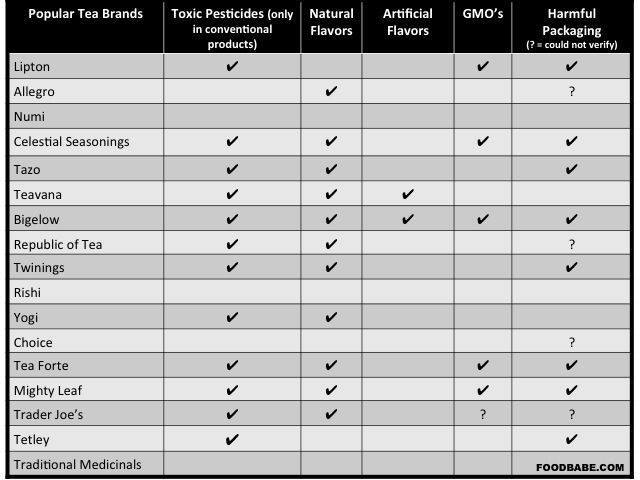
What’s in your tea?!

10171819_10152338716598028_2928856908432044808_n


After being a huge fan of Celestial Seasonings Zinger blends for making iced tea for a couple years now, and feeling it was better than juice, I finally made the switch to buying bulk, loose leaf, organic tea & couldn’t be happier! I currently have raspberry leaf & spearmint, with hibiscus & a citrusy blend coming next week, all caffeine free, and all organic. It was my only New Year’s resolution this year, and I’m so thrilled to have made the switch already. The teas I’ve bought so far are ~$10/#, and 1# is A LOT of tea. So it’s economical & environmentally friendly as there’s very little packaging, just the bag it comes in! Do you know what’s in your tea?! Credit to Food Babe for the chart.


Pure Play Kids Coupon Code

I posted yesterday that Pure Play Kids created a coupon code just for this page, but forgot to ask when it expired. Well, it’s good for one year!! That way you can do your Birthday, and other shopping as needed, not right now!! This makes me so, so happy to share!!! Be sure to thank them when you do use it as well. Mike & Tania are truly great folks, who care deeply about made in the USA products!! CODE: ECOUSA2015 for 10% off your entire order

Pure Play Kids– it just doesn’t get much better!!

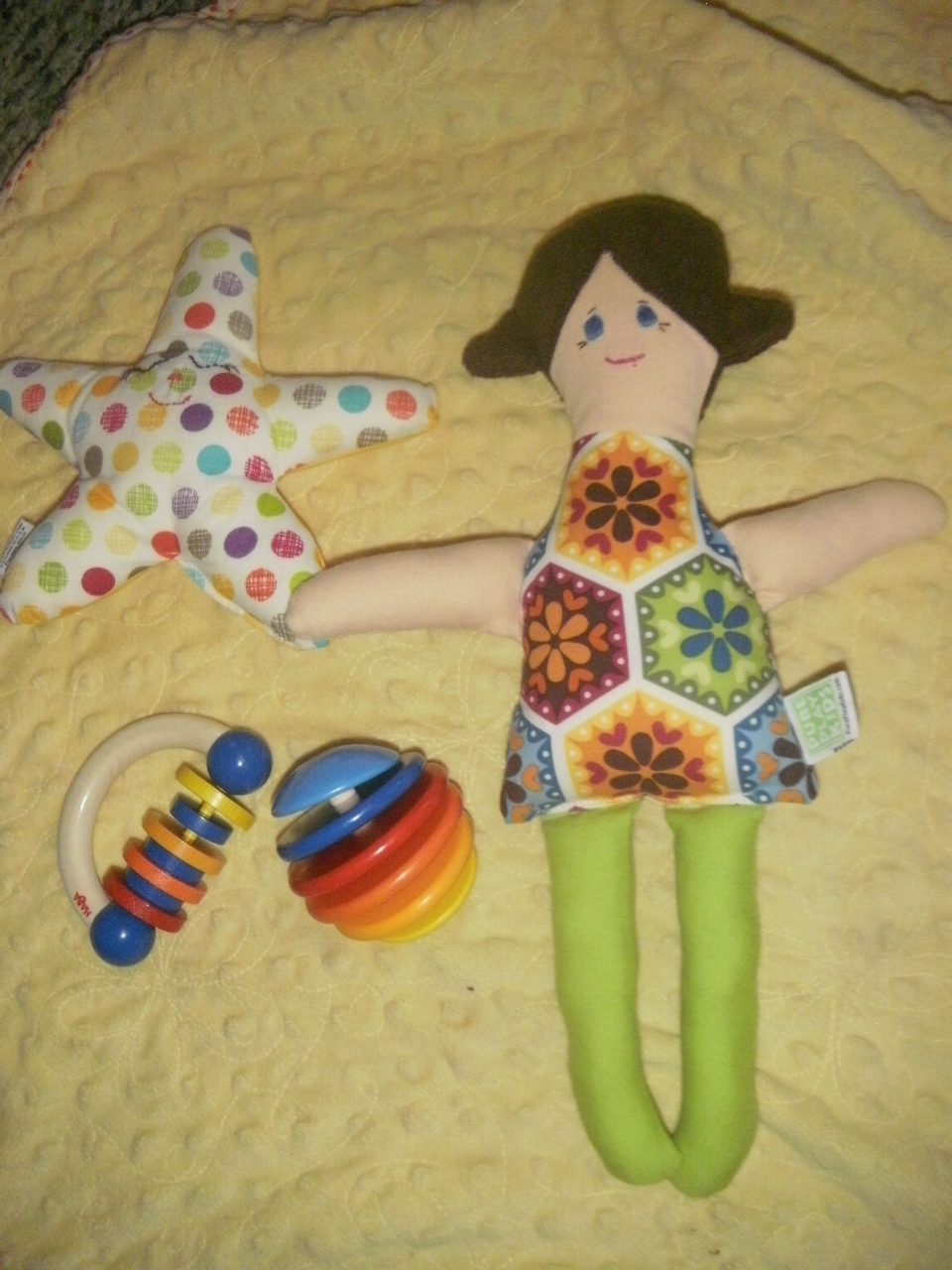
Image Ohhhhh my goodness– there is little that’s more fun than opening a large box of goodies from Pure Play Kids!!! I adore our new additions sooooo much!  My son’s 3rd birthday is coming up in a couple weeks so I got several things for him which I’ll share later in a different post, but I wanted to show some of the items I got for my Baby Girl, who is just about 8 months currently. I spent a lot of time researching trying to find an organic doll made in the US of completely US sourced materials, and did not find one that met all those criteria, at least not for under a couple hundred dollars for some Waldorf options (great if you can afford them!). Pure Play is as close as you can get to what I wanted. The dolls are hand stitched in the US from organic fabric imported from South Korea, and are GOTS certified organic inside & out. I was pleasantly surprised by how large it was, from the website pic I was expecting it to be smaller. For $30 I could NOT be happier with her. I also got an organic cotton star which is awake on one side, asleep on the other and the other side you can’t see is yellow. I did branch out a bit & make my first Haba purchase through Pure Play, the rattle & ball are made in Germany. I’ve had several people tell me that if I want truly the safest products I’d support made in Europe more, and I agree they have stricter safety standards which makes me happy! My goal is to find truly safe products that would meet European standards, while supporting made in the USA. But, I did want to add a bit more color & variety to my Baby Girl’s safe toy offerings, so decided to add these.

The Pure Play folks (Mike & Tania, who are super amazing & dedicated to made in the USA as much as possible) have told me they plan to increase their made in the USA rattle selection, and are always open to new ideas too. I’m going to put in a request for a boy doll to go with the couple of girls that are offered! All together I spent $200, which yes is a lot of money, but I feel I got SO much for that money, and other than the 2 items from Haba my entire order is made in the USA! My sister added a couple things to my order for her daughter’s Easter basket, one of the items she ordered was a magnetic farm set. I didn’t pay attention when ordering it to see where it was made, but did not expect it to be made in the USA (Pure Play offers many made in Europe items too, but NOTHING made in China!). Sure enough, it is indeed made in the USA, and they have a whole selection of different magnet sets which I am so happy to have learned about. I’ve looked for, and been asked about magnets in the past & for some reason my searches did not lead me back to Pure Play, but now that I know I will be spreading the word!! And, they generously created a coupon code for this page! 10% off using the code: ECOUSA2015 the code is good all of 2015!! Their website: http://www.pureplaykids.com/

Silicone– a safe alternative to plastic?

February 2, 2014

Silicone Safety
By Jolene Marty
Co-Admin Eco-Friendly baby/family products MADE in the USA

With such limited products that are actually safe for our family, it’s always wonderful to hear about alternatives we can use. I used to think silicone was undoubtedly one of them. Upon researching into silicone a bit further, I was disappointed that there was not more information on the safety of the product. Criteria I was trying to specifically find was how easily, and in what situations, might this substance leach or off-gas. Even though silicone itself is a natural substance, is it something we need to handle with caution in much of the same ways as plastic?

Upon reviewing several articles I unfortunately do not have a clear answer. Here are some things that I did find out about silicone. Also if you do choose that this is something you will use, or continue to use, some safety pointers to help keep your risk, no matter how small, to a minimum:

  • Silicone is from a man made, chemically processed substance made from silicon, oxygen, and often other chemicals
  • Not a lot of studies have been officially done on the safety/long-term effects of Silicone, but it is deemed safe by the FDA
  • There are no official reports found of off-gassing or leaching in question
  • Has a high heat resistance
  • Breaks down easily in environment, often recyclable
  • Has thousands of uses including household and industrial


If you choose to use Silicone products here are a few safety tips:

  • Do not use in the oven or on high heat surfaces as the studies of off-gassing have not been thoroughly studied
    • Would include to hand wash silicone items as dishwashers can become quite hot
    • Do not use silicone products that contain fillers
      • Take your silicone and if you can, twist it in your hands…if the twist areas are white, it has fillers
      • Do not cut silicone such as in the case of silicone cutting boards/mats. They often contain very tiny pieces of fiberglass

Silicone has been a much better alternative to plastic in our world but, it is still a man-made product that has been altered and chemically processed in a plant to fit a variety of needs. It would be a good choice over plastic for many things however, like plastic it still has the opportunity to off gas when heated.

If you are interested in some articles that were found interesting including one explaining the science of silicone please look below!

http://www.livescience.com/37598-silicon-or-silicone-chips-implants.html

http://www.dowcorning.com/content/discover/facts.aspx?wt.svl=FS_readmore_home_FACT

http://www.symptomfind.com/health/is-baking-with-silicone-safe/

http://green.yourway.net/is-silicone-bakeware-really-safe/


Navigating Through the World of Plastics

by Jolene Marty
Co-Admin Eco-Friendly baby/family products Made in the USA
images

There are many wonderful advancements in our world that have been made possible with the introduction of plastics. Many medical devices and lifesaving tools are made from plastic and they have most certainly made our lives more convenient. There is a plastic option, often times disposable, for almost anything. Plastic is durable with its strength being impressive enough to make moms and dads everywhere happy to use them for sippy cups and toys that get thrown across the room, and trust in it enough to keep our children safe in their car seats. Unfortunately in the quest to make things fast, cheap, convenient, and the impossible actually possible (like in medical equipment), companies have put our health on the back burner in order to achieve these things.

Plastic is a synthetic material made from a wide range of organic polymers such as polyethylene, PVC, nylon, etc., that can be molded into shape while soft and then set into a rigid or slightly elastic form. (Google Definitions) To manufacture plastic, depending on the type, you need to use chemicals – a lot of them.

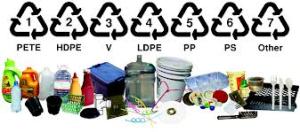
There are already several great resources on which plastics mean what and why they are good or bad. There are some very conservative views on what is safe in terms of plastic but here is my ‘I like to be better safe than sorry’ evaluation of the different kinds, broken down by recycling codes:

Plastic #1: PET or PETE (polyethylene terephthalate)

Found In: bottled water, bottled cooking oil, juice and sports drink bottles, condiment  bottles, mouthwash bottles, carpet, textiles, microwavable food trays

Safety/Concerns: It is generally regarded as safe for a one time use but is advised not to  be used to refill, heat up, or reuse in any way. (HealthyChild, 2013) If you do choose to use these items, I would advise to buy in the winter/cooler weather only as sitting in a hot transport truck, the trunk of your car, etc. heat unused bottles up and leach chemicals into your item.

Plastic #2: HDPE (high-density polyethylene)

Found In: milk and water jugs, shampoo, toys, household cleaner bottles, pipes, wire and  cable coverings, picnic tables, recycling bins, grocery/retail bags, cereal box liners

Safety/Concerns: It is considered a low-hazard plastic. (Mercola, 2013) While generally  considered safe by the public, it also has tested positive for releasing estrogenic activity.

Plastic #3: PVC (polyvinyl choride)

Found In: cling wrap, shower curtain liners, mattress covers, toys, peanut butter jars, deli  and meat wrap, siding, window frames, blood bags, medical tubing, carpet backing and flooring

Safety/Concerns: Considered one of the most toxic of the plastics, releases PVC dioxins into the  environment, and is a potent carcinogenic to animals and humans. (HealthyChild, 2013) Linked to birth defects, reproductive disruptors, hormone disruptor, and cancer. This should be at the top of plastics to avoid.

Plastics #4: LDPE (low-density polyethylene)

Found In: garbage bags, dry cleaning bags, newspapers, fresh produce bags, floor tile, adhesives and sealants, toys, container lids, coatings for paper milk cartons, hot and cold beverage cups

Safety/Concerns: It is considered a safer plastic which is why it is used in many household and food bags however, studies have shown risks of it leaching estrogenic activity much like HDPE

Plastics #5: PP (polypropylene)

Found In: Ice cream and yogurt containers, drinking straws, syrup bottles, diapers, medicine bottles, car parts, garden rakes, appliances, storage bins, baby bottles

Safety/Concerns: Probably the safest plastic as of right now. It is highly resistant to heat and many companies choose to use this kind of plastic because of its safety. According to Mercola’s website, there was a study done where the PP did leach at least two chemicals but it is still under further study for accuracy.

Plastics #6: PS (polystyrene)

Found In: most disposable dinnerware, take out containers, packing peanuts, meat and poultry trays, packaging for electronics, aspirin bottles, coat hangers, toys, egg shell cartons, EPS foam

Safety/Concerns: Also known as Styrofoam, it can leach (especially when heated) styrene, a known neurotoxin. It can cause brain and nervous system problems, as well as kidney and stomach problems. Styrene leaches from containers significantly when oily foods are heated in such. (LifeWithoutPlastic.com)

Plastics #7: Other (includes polycarbonate, nylon, acrylic, and also alternative plastics)

Found in just about anything including toys, other children’s items, everyday items around your house, your car, etc. This is a catch all category that not only includes very dangerous plastics such as polycarbonate, which leaches BPA (and can be found lined in formula cans, 5-gallon water bottles, food can linings, to name a few) but it also includes some of the safer plastics including ‘green’ plastics made from rice, potatoes, etc.

A side note about acrylonitrile styrene (AS) or styrene acrylonitrile (SAN), and acrylonitrile butadiene styrene (ABS) taken in an excerpt from LifeWithoutPlastic:

Two other types of plastic that fall under code 7 are acrylonitrile styrene (AS) or styrene acrylonitrile (SAN), and acrylonitrile butadiene styrene (ABS). Both AS/SAN and ABS are higher quality plastics with increased strength, rigidity, toughness and temperature and chemical resistance.   AS/SAN is used in mixing bowls, thermos casing, dishes, cutlery, coffee filters, toothbrushes, outer covers (printers, calculators, lamps), battery housing.  The incorporation of butadiene during the manufacture of AS/SAN, produces ABS, which is an even tougher plastic. ABS is used in LEGO toys, pipes, golf club heads, automotive parts, protective head gear. Our research on risks associated with AS/SAN and ABS is ongoing. (LifeWithoutPlastic.com)

 Before you get too worried and start running around your house looking at every code (or not being able to find one) on everything plastic or worrying about every possibility in your child’s toys take a look at a few of these general rules listed below:

  • Absolutely avoid plastics with #3 and 6. Those are the two that leach the easiest and with the most chemicals.
  • Try to avoid, when possible #1, 2 and 4. If you must use them do not use if you know they have been heated, previously used and don’t reuse or heat up yourself, in order to keep them in the safest state.
  • Keep in mind #7 isn’t all horrible as long as it’s not polycarbonate (BPA or BPS). Alternative ‘green’ plastics, ABS, and AS/SAN are going to be high quality and even under heat the least likely to have any toxic release. So far through studies these are ok to use, even for children.
  • The safest plastic, if you need to use plastic, will be #5. Companies are using it more and more you would be surprised looking around!

As always, it is always best to find glass, wood, or stainless steel made options when you are cooking, eating, drinking; amongst many other things you would generally use plastic for. In our lives however, it is almost impossible to get away from plastic entirely. Also, eliminating plastic from our child’s toy box can be a hard and daunting task especially with family members who do not see you eye to eye on the trouble with plastic, continue to offer up those kinds of play things. Keep in mind the few pointers listed above and you will be able to navigate easier through the store aisles!

Listed below are several amazing resources that were found when writing this article. Included are the ASTM standards on plastics, an American Plastic Toys corporation, and a few lists of more common things you can find in each plastics category.

ASTM Plastics Standards: http://www.astm.org/Standards/plastics-standards.html

American Plastic Toys: http://www.astm.org/Standards/plastics-standards.html

  • Toy list that uses them and are made with no lead, PVC, phthalates, or BPA

A list of companies that sell the toys with APT plastics: http://www.americanplastictoys.com/products.htm

Plastics Numbers & What They Mean by HealthyChild.org: http://healthychild.org/easy-steps/know-your-plastics/

Grants Pass Oregon’s recyclables list by number: http://www.grantspassoregon.gov/index.aspx?page=1002  (Great resource to find out more things that contain which plastics number)

How to Recognize the Plastics That are Hazardous to You by Dr. Mercola: http://articles.mercola.com/sites/articles/archive/2013/04/11/plastic-use.aspx

Another plastics breakdown: http://lifewithoutplastic.com/en/about-plastic/plastic-types

IF YOU ARE CURIOUS ABOUT MEGA BLOKS READ THIS ONE: A plastics article with some toy information: http://lilthumper.blogspot.com/2011/06/legos-mega-bloks-plastics.html
Natural Candy Store refer-a-friend link

From my inbox: ” I was about to place an order with naturalcandystore.com, which I heard of through one of your posts. I noticed that they have a refer a friend program, if you want to refer me you can get a $5 coupon. Just thought I’d put that out there.”
It’s true, I can earn $5 worth of free candy for any new customer who shops by starting out with the link I’ll provide below. I don’t need your email or anything like to refer to Vitacost, you just have to be a brand new customer, and start with the link below. You don’t get anything, sorry, except the best natural & organic candy on the market. If I had known about this at Christmas when a ton of you shopped with them for the 1st time, I think I’d have free candy coming for a year   All those of you who now have shopped with them can use this the refer-a-friend now too, instructions on their website.
It’s a fabulous resource for great candy of all categories. Yes, organic sugar is still sugar, but I believe in indulging healthily from time to time! Shipping is expensive until you place a $50 order, then it’s $6.99 (from memory). They have a fabulous Valentine’s selection now, then will have Easter candy when that Holiday is over.
HERE’S THE LINK: http://www.naturalcandystore.com/?a=nHbolT

Previous Older Entries Next Newer Entries

Design a site like this with WordPress.com
Get started